Sanfang Qixiang
China’s largest preserved Ming-Qing lane district: courtyards, historic residences, tea rooms, and street food across 40 hectares in the center of Fuzhou.
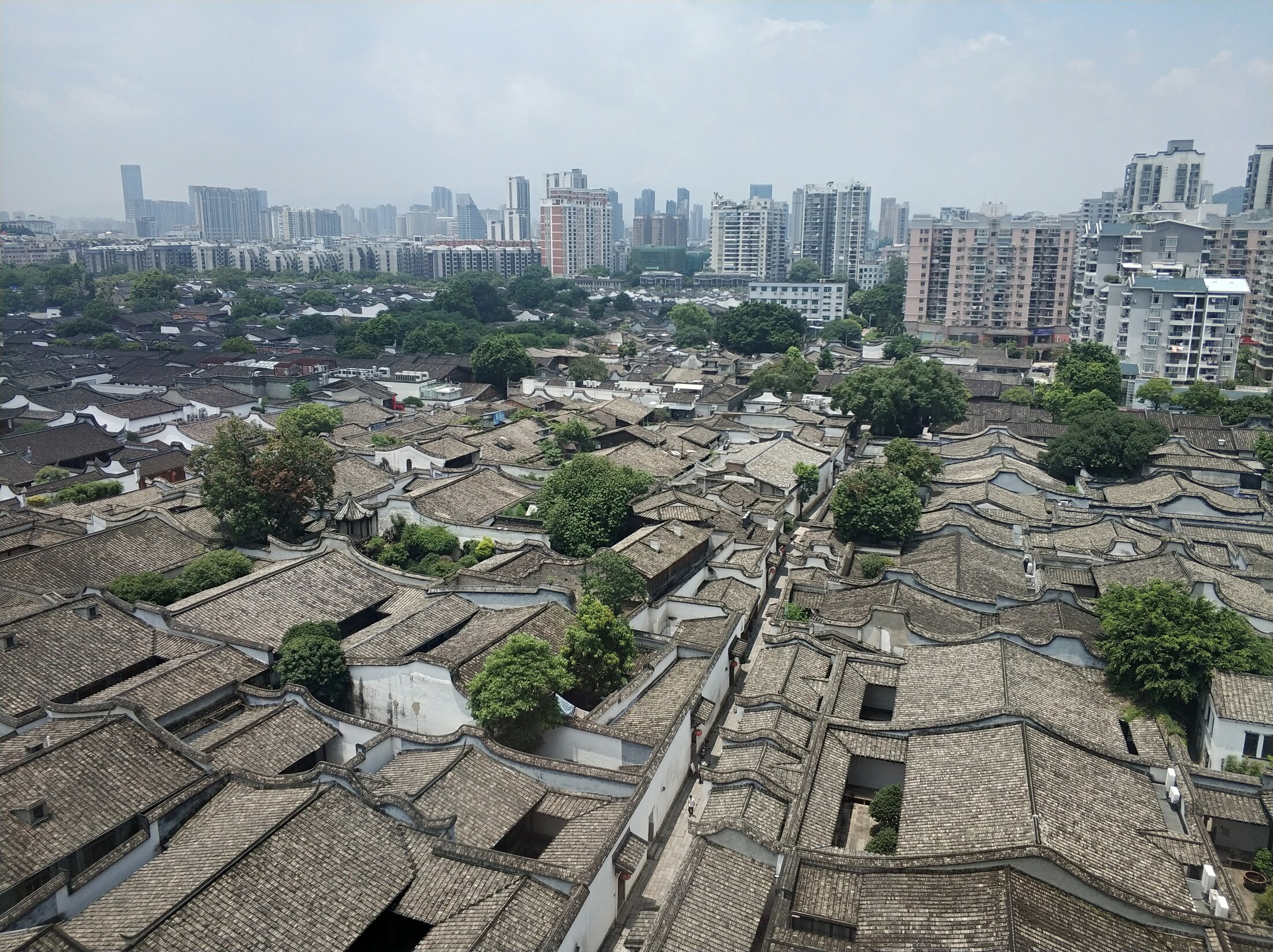
Sanfang Qixiang — Three Lanes and Seven Alleys — is the largest and best-preserved Ming and Qing dynasty urban quarter in China, sometimes called a living fossil of China’s ancient ward system. The district covers roughly 40 hectares and contains more than 200 preserved courtyard houses, ancestral halls, and lane-front shophouses spanning several hundred years of Fuzhou civic life.
More than a museum piece, the district produced a disproportionate number of modern China’s reformers, scholars, and literary figures, including Lin Zexu, Shen Baozhen, Lin Juemin, and Bing Xin. Their former residences sit alongside working tea rooms, lacquerware studios, and street-food stalls that still serve Fuzhou staples like fish-ball soup and peanut-stuffed glutinous cakes.
It works especially well as a late-morning or afternoon anchor. Let the lane structure lead the visit rather than chasing marked courtyards in sequence: the goal is to understand how this preserved urban fabric breathes inside a modern capital city.
Practical Tips
Leave room to drift into side lanes
The district feels much better when you do not over-tighten the walking order.
Visit Lin Zexu Memorial nearby
The free memorial hall on Macao Road is a short walk from the district and adds useful historical context about Fuzhou’s most famous son.
Use one longer stop instead of too many check-ins
A slower block here usually beats trying to chain multiple city sights too tightly.
Want to visit Sanfang Qixiang?
Our concierge team can build a trip that includes this and more.
Plan My Trip